

ULA Vulcan Centaur Launch Fails to Deliver 40 Amazon Leo Satellites to Orbit
United Launch Alliance's Vulcan Centaur launched from Cape Canaveral on November 15, 2026, carrying 40 Amazon Leo satellites that did not reach orbit.
Follow this storyOnly in this browser
United Launch Alliance (ULA) said it lost telemetry and the mission about 10 minutes after the Vulcan Centaur lifted off from Cape Canaveral Space Force Station in Florida. The rocket carried 40 Amazon Leo internet satellites, which were lost with the mission.
Key details
- ULA’s early assessment found low booster performance beginning just after liftoff, leading to stage separation at an altitude and velocity too low to reach orbit.
- ULA said the Centaur V upper stage performed nominally but could not make up for the booster performance loss. The stage uses two RL-10C engines.
- ULA said the solid rocket boosters appeared to perform nominally on this flight; the exact booster problem remained undetermined at the time of the report.
- Vulcan’s first stage uses two BE-4 engines built by Blue Origin.
The Vulcan Centaur carried 40 Amazon Leo satellites on its November 15 flight.
Why it matters
Amazon had booked about 100 launches across several rocket types for its satellite constellation, including 38 Vulcan flights. Before this mission, about 400 operational Amazon Leo satellites had reached orbit through 14 launches.
More stories
Space
Surveyor 6 Makes First Powered Hop From the Moon
Space
NASA Invites Public to Mark Voyager 1's One-Light-Day Milestone
Space
ISS Research Tests 3D Printing of Human Cells in Microgravity
Space
1966 Leonid Meteor Storm Reached About 40 Meteors Per Second
Space
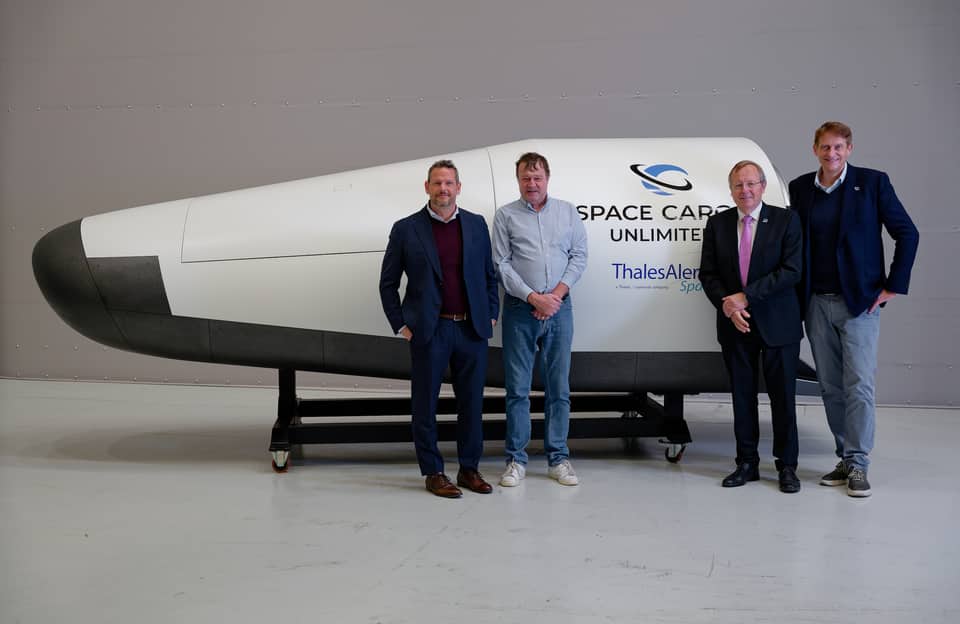
Space Cargo Unlimited Unveils REV1 Reentry Vehicle in Bremen

Space