Belavia Can Buy Boeing Parts Directly After U.S. Commerce License
Director General Igor Cherginets said on October 31, 2026, that the U.S. Commerce Department licensed Boeing to work with the Belarusian carrier. He said the license covers spare parts, components, and software for the existing fleet and opens talks on buying aircraft from Boeing.
FlyMarshall Newsroom1 min read
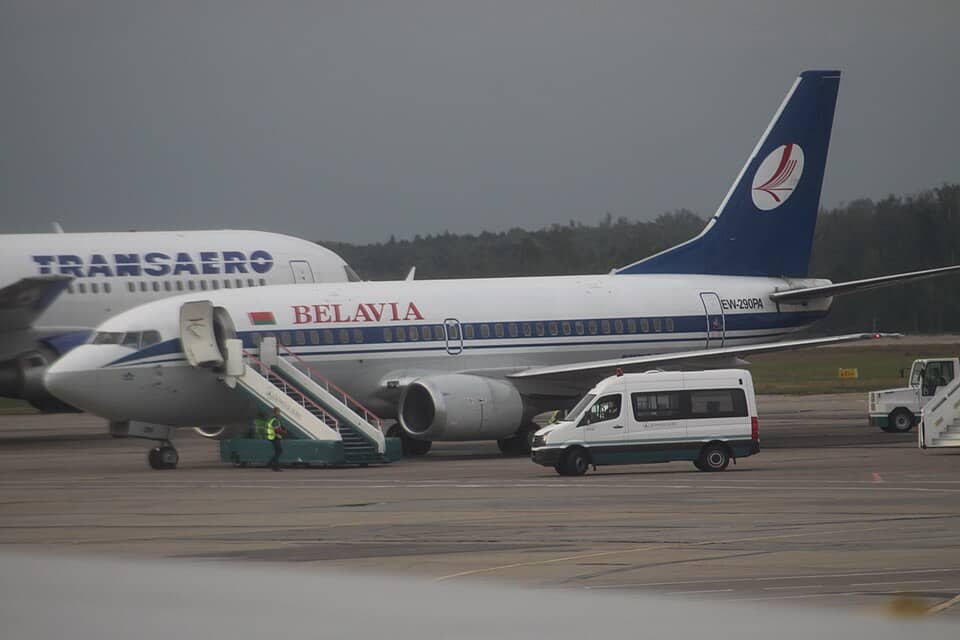
Representative image. Photo: Aeroprints.com / Wikimedia Commons, CC BY-SA 3.0
Belavia Director General Igor Cherginets said on October 31, 2026, that the U.S. Commerce Department licensed Boeing to work with the national carrier. He said Belavia can now take spare parts, components, and software straight from Boeing for the jets it already flies, and that the same license opens talks on buying aircraft from the company.
Cherginets said the U.S. Treasury had already issued a matching authorization, and that a year earlier Washington lifted political sanctions on Belavia after talks that included President Alexander Lukashenko and a U.S. delegation.
Key details
- Belarus UN envoy Valentin Rybakov said another positive decision had just been taken and that Minsk and Washington still have consultations ahead.
- Cherginets said direct Boeing work will cut parts and software costs and speed deliveries.
- No signed aircraft purchase contract was announced with the license.
This will allow Belavia to receive spare parts, components, and software directly for the aircraft it already operates.
Why it matters
A Commerce license on top of the earlier Treasury authorization puts Belavia and Boeing on a direct parts path and a talks path for new aircraft.
What happens next
Cherginets said talks on buying aircraft can now start. Has Belavia named any Boeing purchase talks after the license?
More stories
Learjet 60 N722BD Crashes in Greenacres, Palm Beach County
Cape Town Airport Reports 60 Flight Delays by 1 p.m.
Jersey Airport Drone Activity Diverts Three Inbound UK Flights
IndiGo Reports ₹1,879 Crore Loss for July–September 2026
Mumbai Airport Plans Terminal 1 Replacement, Targeting December 2030 Completion