
TOI-2535 b's Transits May Disappear for at Least 30 Years
A study attributes the exoplanet's missing transits to an unseen companion that changed its orbit's alignment with its star.
FlyMarshall Newsroom1 min read
Photo: Robert Lea
Researchers studying TOI-2535 b, about 1,000 light-years from Earth, propose that gravitational interactions with an unseen neighboring planet changed the exoplanet’s alignment with its star. As a result, the planet no longer passes in front of its star from our viewpoint, according to the report.
Key details
- NASA’s TESS observed TOI-2535 b from April 2019 through March 2026, according to the report.
- Before its transits stopped appearing, the planet had an orbital period of 8.25 Earth days.
- The research appeared in The Astrophysical Journal Letters on November 9, 2026.
TOI-2535 b’s transits are not expected to resume for at least 30 years.
Why it matters
Transit observations let astronomers detect exoplanets as they pass in front of their stars. The reported change in alignment offers a case in which gravitational interactions may alter whether a distant planet remains visible through that method.
More stories
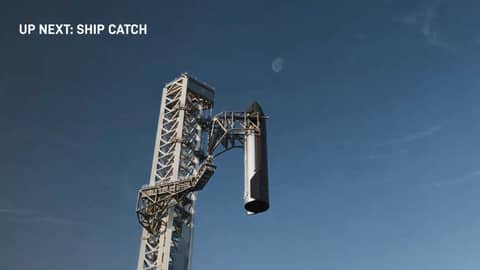
SpaceX Plans Starship Flight 15 for Nov. 13
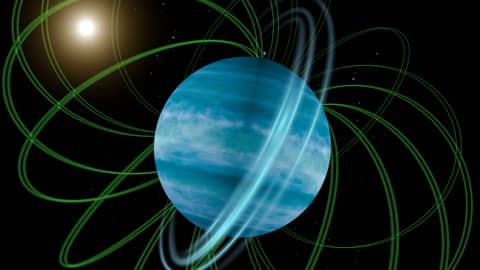
Study Models Uranus and Neptune's Unusual Magnetic Fields
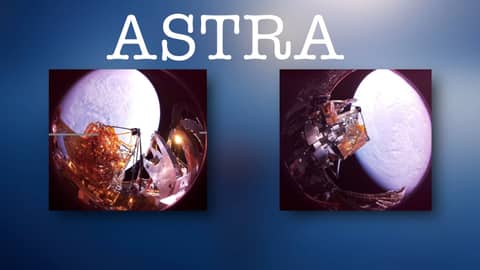
Caltech-Led ASTRA Robot Builds Part of an Antenna Structure in Orbit

NASA's Curiosity Rover Images Planned Drill Target Nazca

Rocket Lab Neutron Launch Price Reportedly Rises to $70 Million