
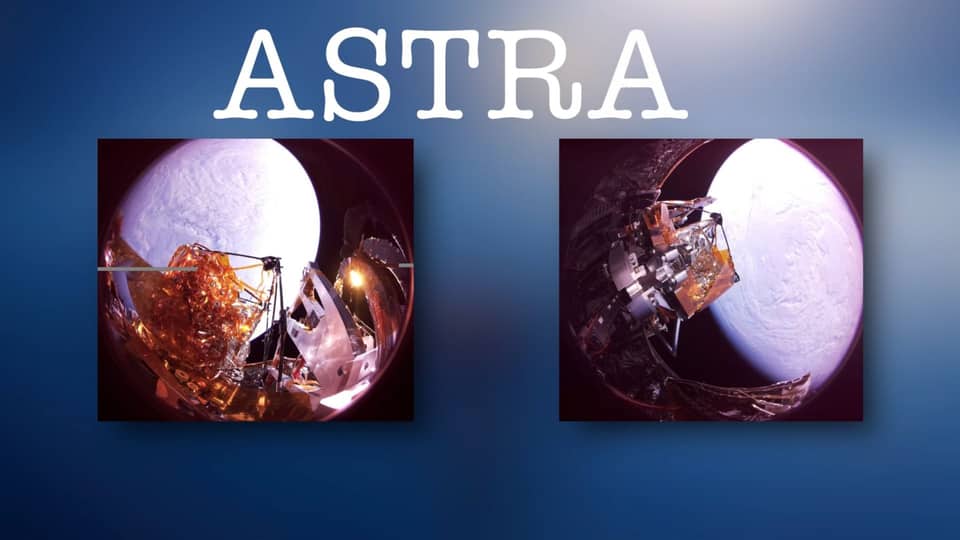
Caltech-Led ASTRA Robot Builds Part of an Antenna Structure in Orbit
Caltech professor Sergio Pellegrino said ASTRA autonomously assembled part of a truss-based antenna structure in space.
FlyMarshall Newsroom1 min read
Photo: Caltech/DARPA
On Nov. 5, 2026, Caltech professor Sergio Pellegrino said the ASTRA demonstration achieved the first autonomous construction of a structure in space. The payload assembled part of a truss-based antenna, rather than the full structure.
Key details
- ASTRA stands for Autonomous In-Space Tensioned Reflector Assembly.
- Caltech led the demonstration, with funding from DARPA.
- The structure measured 1.4 meters (4.5 feet) across.
- The robot used Kapton film, composite fiber tubes and aluminum joints.
- ASTRA launched on Momentus’s Vigoride 7 space tug as part of SpaceX’s Transporter-16 rideshare mission on March 30, 2026.
- The payload carried two prebuilt truss sections and equipment for additional construction. The team did not complete the full truss within the time available.
- Engineers had communication windows totaling about 15 minutes per day to send commands and monitor the robot.
ASTRA assembled part of a truss-based antenna measuring 1.4 meters across.
Why it matters
DARPA’s NOM4D program is developing methods to build large structures in space, with a stated goal of designs hundreds of meters or kilometers in scale. ASTRA’s demonstration put autonomous assembly to work on part of a structure in orbit.
More stories
Space
NASA's Curiosity Rover Images Planned Drill Target Nazca
Space
Rocket Lab Neutron Launch Price Reportedly Rises to $70 Million

Space
2027 and 2028 Solar Eclipses Offer Viewing Routes Across Three Continents
Space
NASA's ESCAPADE Probes Complete Powered Earth Flybys
Commercial
ANA and Vietnam Airlines Mark 10 Years of Partnership, Pursue Joint Venture
Commercial