

X-ray Observations Link AT 2016blu's Repeating Flares to a Compact Companion
Chandra observations of the star system revealed X-rays alongside an optical outburst, supporting a proposed explanation involving a neutron star or stellar-mass black hole.
Follow this storyOnly in this browser
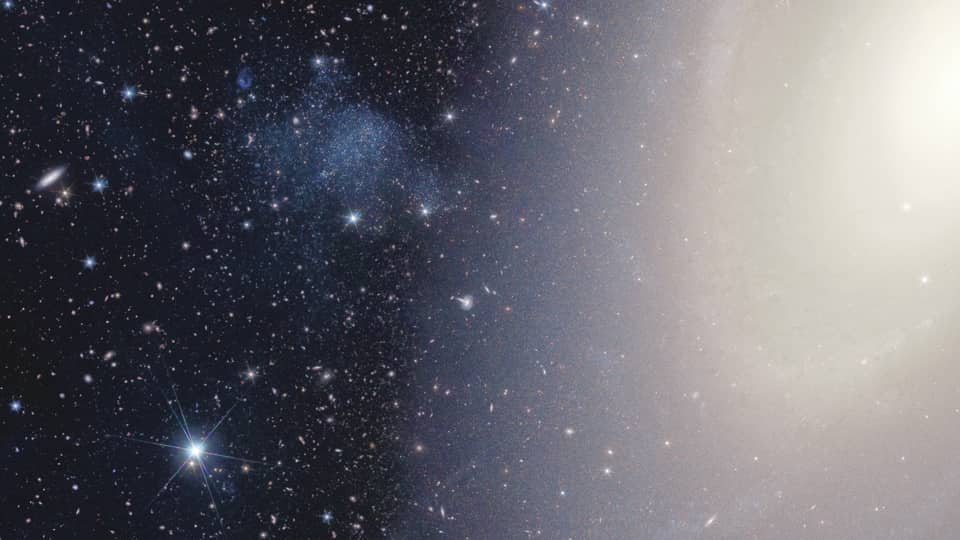
Chandra observations in March 2026 detected X-rays during an optical outburst from AT 2016blu, a luminous blue variable in NGC 4559. Researchers interpret the signal as evidence that the star has a compact companion, which could be a neutron star or a stellar-mass black hole.
Key details
- AT 2016blu was first observed as a supernova-like event on January 11, 2012, in a galaxy about 25 million light-years away.
- The system’s bright outbursts recur about every 113 days; the report counted 27 events by its publication.
- The proposed companion follows an elliptical orbit around the star, with a reported orbital period of 113 days.
- The luminous blue variable has a reported mass of at least 33 times the Sun’s.
- The research paper appeared in The Astrophysical Journal on November 9, 2026.
AT 2016blu’s outbursts recur about every 113 days.
Why it matters
Researchers propose that the companion draws gas from the star near the closest point in its orbit. The gas falling onto the compact object could produce X-rays that heat previously ejected material, making it glow in visible light.
More stories

Space
ESA's Philae Lander Reached Comet 67P on November 12, 2014

Space
SpaceX Sets Starship Flight 15 Launch Window for November 13
Space
Euclid Releases First Major Dataset From 13 Months of Sky Survey

Space
Pakistani Astronaut Expected to Join China's Shenzhou 24 Mission

Space
Commercial Satellite Captures Overhead Image of the International Space Station
Space