

Webb Observations Reveal Quasar Pair in the Early Universe
Researchers identified the pair J1602+4228AB in observations from about 900 million years after the Big Bang.
Follow this storyOnly in this browser
Researchers led by Silvia Onorato of NOIRLab identified the quasar pair J1602+4228AB while examining James Webb Space Telescope Aether survey data. The team used JWST’s NIRSpec Integral Field Unit observations, with Gemini North observations helping resolve the pair.
Key details
- The pair is nicknamed Nāpōwawāʻenakaulua.
- The black holes have reported masses of 1.5 billion and 400 million solar masses; the available information does not assign those figures to the A and B labels.
- The pair lies 18,100 light-years apart.
- The team’s results appeared in The Astrophysical Journal Letters on November 10, 2026.
- The research team describes the pair as the third identified from the Cosmic Dawn era.
The two black holes sit 18,100 light-years apart.
Why it matters
The observations offer researchers a view of two black-hole-powered quasars during the early universe. JWST data and Gemini North observations contributed complementary views that helped researchers identify and resolve the pair.
More stories

Space
OwlO Cloud Plans at Least 10 Orbital Cloud Nodes by 2030
Space
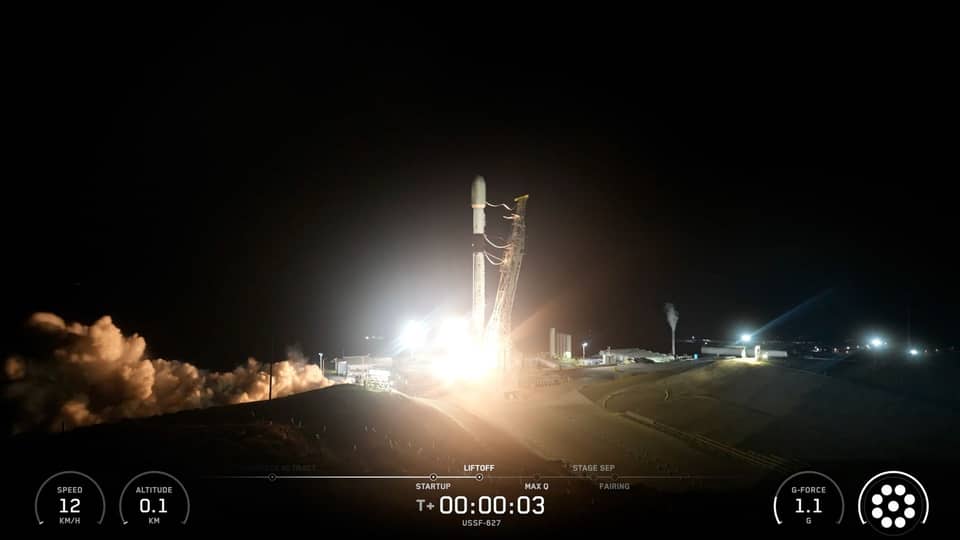
SpaceX Launches U.S. Space Force USSF-627 Mission on Falcon 9

Space
NASA Plans New Review of Perseverance Mars Sample Return Options

Space
CHIME Fast Radio Burst Data Becomes Cathedral Sound Installation

Space
Gemini 12 Launched With Jim Lovell and Buzz Aldrin on November 11, 1966

Commercial