SpaceX Catches Starship Upper Stage at Starbase for the First Time
Ship 42 settled into the Mechazilla chopsticks at about 1:20 p.m. Pacific on Saturday, roughly 22 and a half hours after Flight 15 left Pad 2. It is the first time SpaceX has caught a Starship upper stage returning from orbit. The Super Heavy booster had diverted to the Gulf on Friday.
SpaceX caught Starship Ship 42 at the launch tower at Starbase, Texas, at about 1:20 p.m. Pacific on Saturday, the first time the company has caught a Starship upper stage returning from orbit.
The ship came back roughly 22 and a half hours after Flight 15 lifted off from Pad 2 on Friday. SpaceX said Ship 42 flew a final swoosh over the Gulf, broke through the clouds, and lit three Raptor engines for a landing flip and a slow descent into the tower's mechanical arms, nicknamed chopsticks, which closed to catch the vehicle.
Flight 15 had been SpaceX's first attempt to catch both stages of an orbital launch on the same mission. Super Heavy Booster 22 diverted to an offshore splashdown in the Gulf of Mexico minutes after the 2:47 p.m. Pacific liftoff Friday, after a boostback burn ended early.
Key details
The catch took place at the Mechazilla tower at Starbase's Pad 2 at about 1:20 p.m. Pacific (4:20 p.m. Eastern). That timing matches SpaceX's official flight timeline and reporting from Space com and Payload.
Ship 42 completed 14 orbits and deployed 26 Starlink V3 satellites. SpaceX said it made contact with every satellite, and that the spacecraft had begun raising their orbits to join the constellation.
SpaceX said the ship relit a single Raptor engine for the deorbit burn after more than 20 hours in space. Before the flight, the company said it would attempt a tower catch only if the ship stayed healthy; the alternative was a planned ocean splashdown.
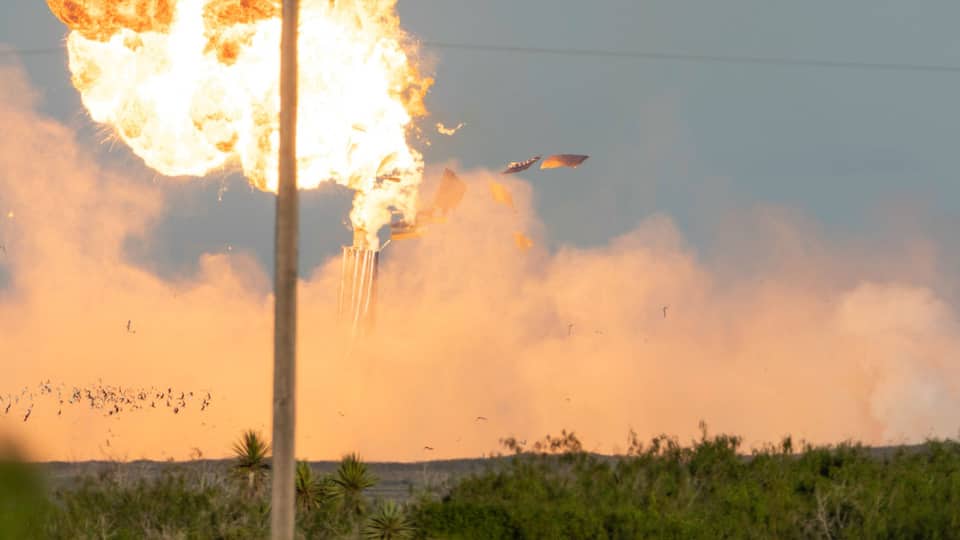
On Friday, Booster 22 relit 32 of 33 Raptor engines for the boostback burn. SpaceX said the burn ended early because of low fuel mass, and that the booster's guidance system then triggered an automated abort and diverted it offshore. The booster completed a landing burn, hovered over the Gulf, and its flight termination system was triggered after engine shutdown. SpaceX said the root cause is under investigation.
"That was the missing link," SpaceX's Dan Huot said on the company's landing webcast. "That was the holy grail of spaceflight, plummeting through fire to be snatched out of the air by steel. We caught a Starship, and now everything changes."
Space com reported the remarks from the webcast. Payload also quoted Huot telling the livestream, "We caught a Starship, and now everything changes."
SpaceX has previously caught Super Heavy boosters on three earlier test flights. Saturday was the first catch of the upper stage, which reached orbit for the first time on Flight 14 in September.
Why it matters
Catching both stages at the tower is SpaceX's path to rapid reuse of Starship, including a quicker return to flight after inspection and refurbishment. The company has now shown it can catch a Super Heavy booster, on earlier flights, and a Ship, on Saturday, but it has not yet caught both on the same mission.
More stories
Starship Flight 15 Carries 26 Starlink V3 Satellites to Orbit
Apollo 12 Launched for Its Lunar Landing Mission on November 14, 1969
SpaceX Targets Starship Ship Catch at Starbase After Flight 15 Launch
Mars and Jupiter to Appear Just Over 1 Degree Apart on Nov. 15–16
SpaceX Launches Starship Flight 15 With 26 Starlink V3 Satellites