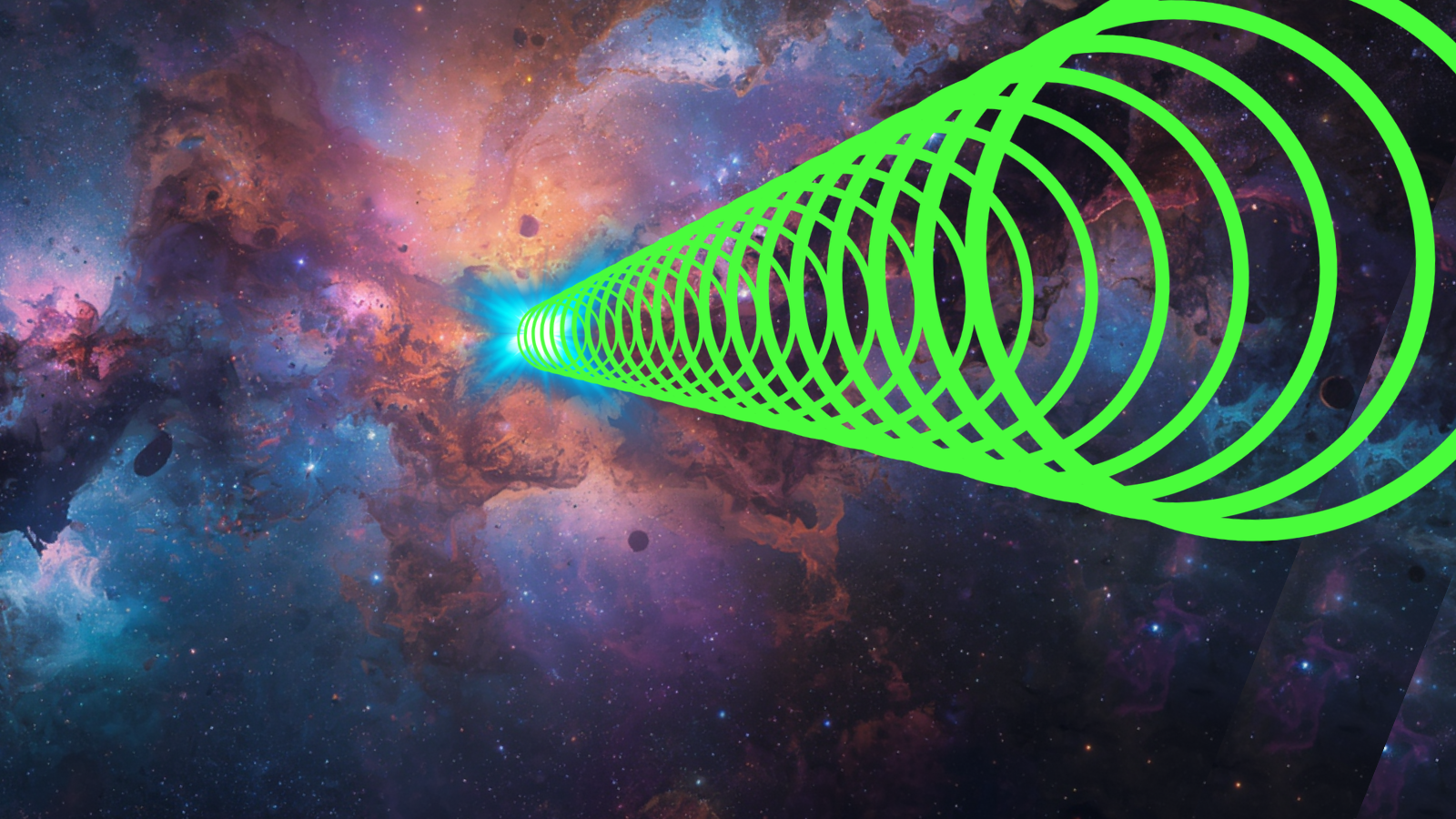
GRB 220706A Shows X-Ray Flaring About 27 Days After Its Burst
Researchers reported X-ray flaring from GRB 220706A about 27 days after the burst in its rest frame, beyond the roughly six-day interval previously reported.
FlyMarshall Newsroom1 min read
Photo: Robert Lea
Researchers reported that GRB 220706A produced X-ray flaring about 27 days after the burst in its rest frame, extending the reported interval for this kind of activity beyond the previous estimate.
Key details
- GRB 220706A was detected on July 6, 2022.
- The previous reported interval for gamma-ray burst flaring was about six days.
- Researchers described the event as an ultra-long gamma-ray burst and reported an unusually bright associated supernova.
- The event’s central engine remains undetermined. A magnetar is one proposed explanation, not an established conclusion.
- The research appeared as a pre-peer-reviewed version on arXiv.
Researchers reported X-ray flaring from GRB 220706A about 27 days after the burst in its rest frame.
Why it matters
The reported late X-ray activity gives researchers a longer period to study how this ultra-long burst evolved. The unusually bright associated supernova adds another feature for astronomers to examine alongside the burst’s still-unknown central engine.
What happens next
Researchers can continue studying the burst and its associated supernova as they investigate the event’s power source. What new details will future observations reveal about ultra-long gamma-ray bursts?
More stories

Star Trek Costumes and Accessories Roundup Covers Three Series
SpaceX Tests 33-Engine Super Heavy Booster Ahead of Starship Flight 15
Webb Image Reveals Star Formation in N159
Rubin Observatory Could Find More of Earth's Mini-Moons
Hunter's Moon Photos Include Passenger Jet Over San Francisco