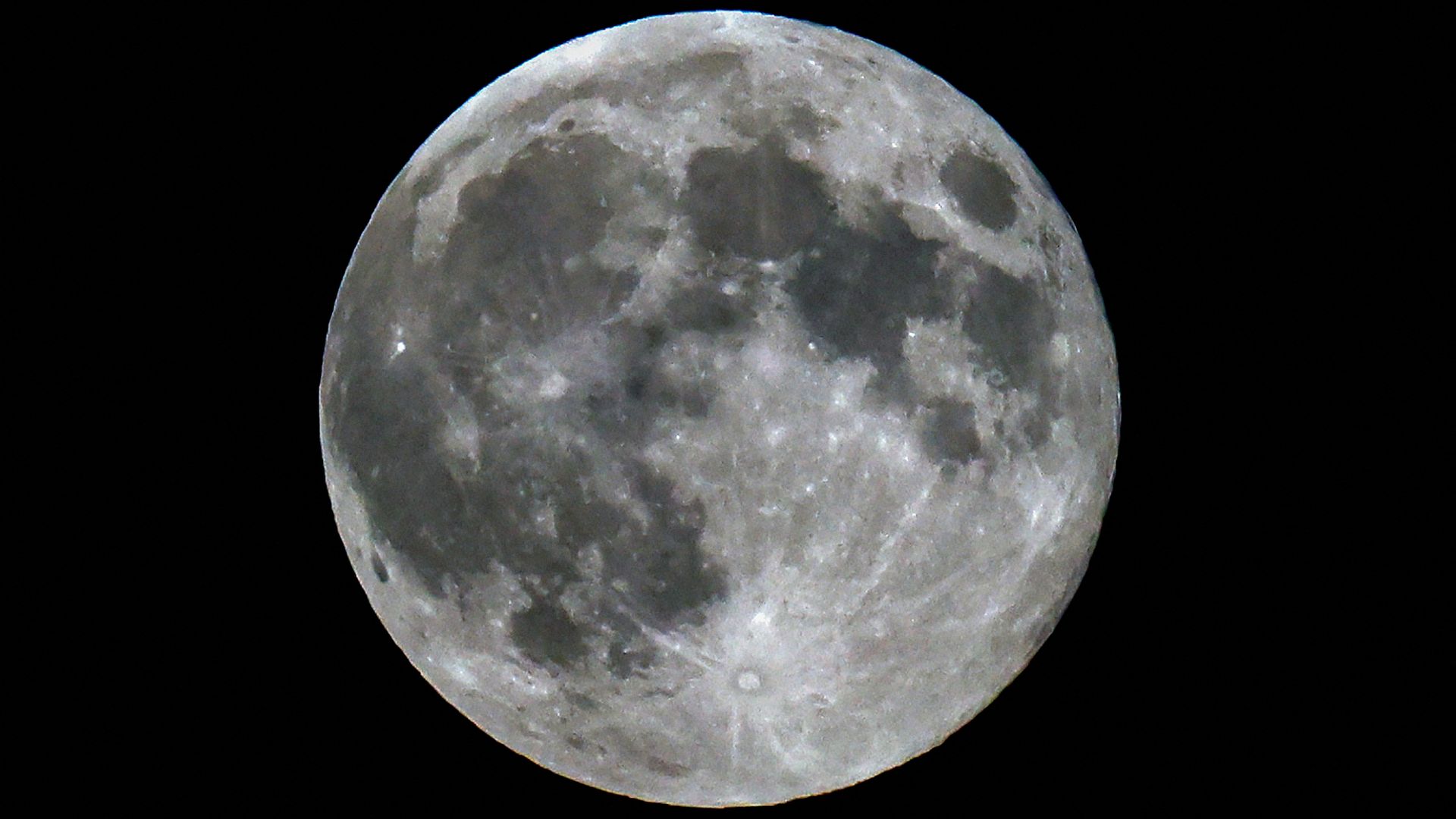
Rubin Observatory Could Find More of Earth's Mini-Moons
University of Helsinki researcher Grigori Fedorets estimates the Vera C. Rubin Observatory could detect one mini-moon every two years through its 10-year survey.
FlyMarshall Newsroom2 min read
Photo: Robert Lea (created with Canva)
Grigori Fedorets, a researcher at the University of Helsinki, presented estimates for mini-moon discoveries at the 2026 Europlanet Science Congress. He expects the Vera C. Rubin Observatory’s Legacy Survey of Space and Time to detect about one mini-moon every two years, with a planned alert-screening system potentially increasing that rate.
Key details
- Fedorets estimates a typical mini-moon capture lasts about nine months and spans roughly three orbits around Earth.
- Models indicate the largest mini-moon present at a given time usually measures about 75 centimeters across; an object around 3 meters wide may be captured every 10 to 20 years.
- The Vera C. Rubin Observatory’s Legacy Survey of Space and Time is planned to run for 10 years.
- Two mini-moons identified in the report, 2006 RH120 and 2020 CD3, were discovered by the Catalina Sky Survey.
Fedorets estimates that a planned alert-screening system could raise the discovery rate to two or three mini-moons per year.
Why it matters
More detections could help researchers compare models of near-Earth objects measuring 1 to 10 meters with estimates drawn from observed atmospheric fireballs. Scientists have also proposed CubeSat demonstrations and possible sample-return missions to study mini-moons. Their proximity to Earth and low relative speeds may reduce the energy needed for a spacecraft to reach them.
What happens next
Fedorets said the survey’s planned alert-screening system could raise the estimated discovery rate to two or three mini-moons per year. The material gives no confirmed mission schedule or approved sampling plan.
More stories

Hunter's Moon Photos Include Passenger Jet Over San Francisco

NASA Outlines Competition Model 2.0 for Science Missions
NASA Revises Artemis Landing Plans for 2027 and 2028 Missions

Blue Origin Rebuilds New Glenn Launch Pad for Targeted 2026 Return
Giovanni Cassini Discovered Saturn's Moon Iapetus in 1671