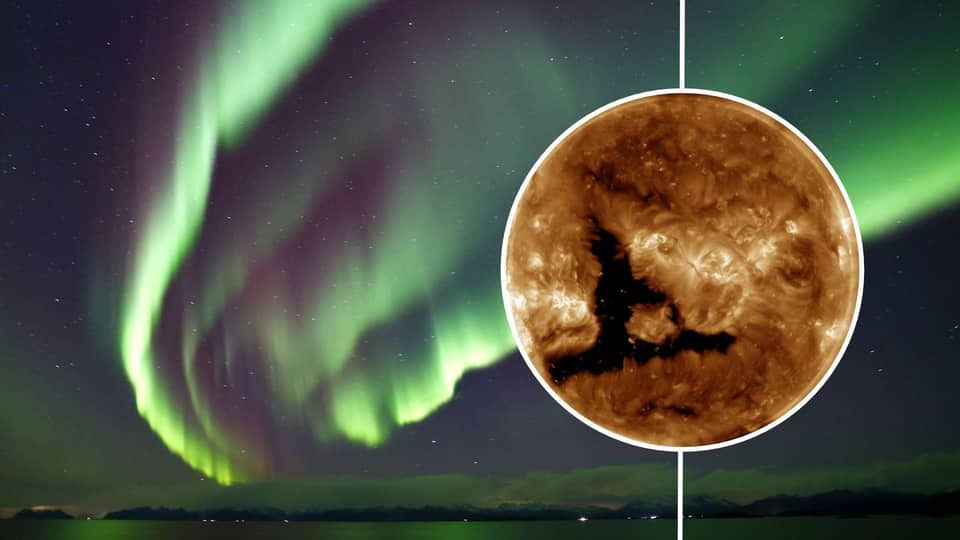
Aurora Forecast Puts Northern Lights in View Across Parts of the U.S.
Forecasts call for minor geomagnetic storm conditions Nov. 6–8, with aurora visibility possible farther south if activity strengthens.
FlyMarshall Newsroom1 min read
Photo: Inset: NASA Solar Dynamics Observatory (SDO), Background: Daisy Dobrijevic
The NOAA Space Weather Prediction Center forecast G1, or minor, geomagnetic storm conditions from Nov. 6–8, 2026, and said G2 conditions could occur Nov. 7–8. Forecasts cited by Space com put possible aurora visibility in northern Michigan and Maine under G1 conditions, with New York and Idaho among the areas that could see the lights if activity reaches G2.
Key details
- The U.K. Met Office forecast solar wind speeds of 550–650 kilometers per second; the typical speed is about 400 kilometers per second.
- A large coronal hole on the Sun was expected to send high-speed solar wind toward Earth, with arrival forecast around Nov. 6–7 and a possible continuation through much of the weekend.
Solar wind speeds of 550–650 kilometers per second were forecast, compared with a typical speed of about 400 kilometers per second.
Why it matters
Aurora visibility depends in part on the magnetic-field orientation of the incoming solar wind. A southward-pointing field can transfer more energy into Earth's magnetic field, while forecasts remain uncertain.
More stories
AST SpaceMobile Plans Blacklift Rocket for BlueBird Satellites
ESA Releases Hera Image of the Didymos Asteroid System
NASA Schedules First Air Show at Kennedy Space Center for November 2026
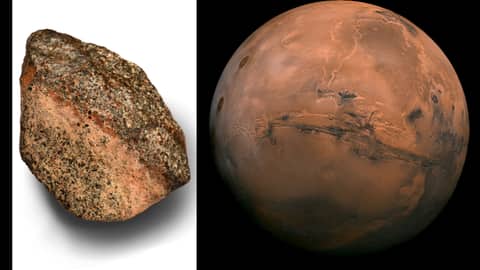
Ancient Martian Meteorite Teghaza 001 Offers Clues to Mars' Early Water

Alaska Airlines Plans Aurora Premium Suites for 787s and Select 737 MAX 10s