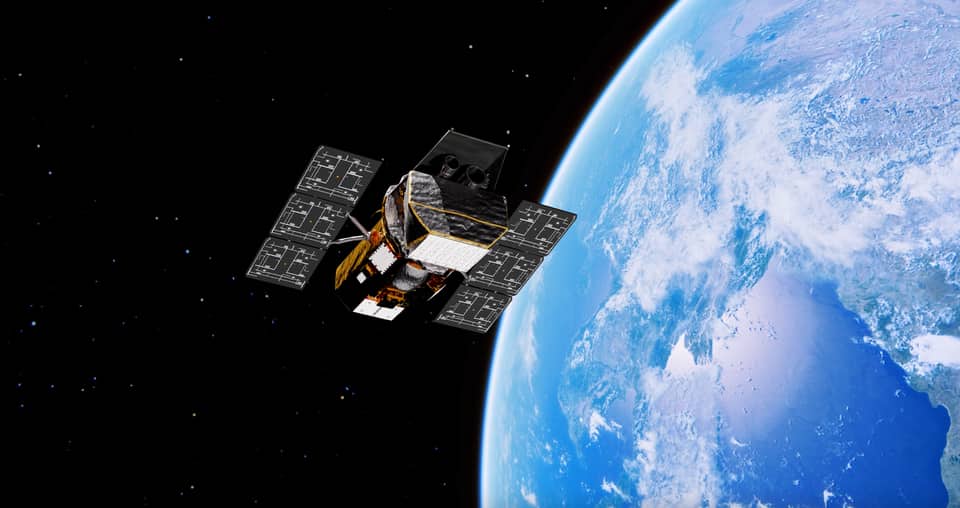
NASA Swift Observatory Re-enters Over Western Indonesia
The U.S. Space Force confirmed the spacecraft re-entered at 4:39 a.m. Pacific on Wednesday, November 4, 2026, over Indonesia's North Sumatra region, at about 3.4 degrees north latitude and 98.6 degrees east longitude.
FlyMarshall Newsroom1 min read
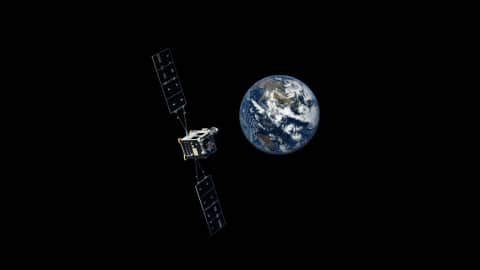
Photo: NASA
NASA said most of the Neil Gehrels Swift Observatory was expected to burn up, but some components may have survived re-entry. Earlier Wednesday, the Space Force had forecast re-entry between 3:42 a.m. and 5:42 a.m. Pacific.
Swift launched from Cape Canaveral on a Delta II rocket on November 20, 2004, on a two-year prime mission. NASA paid Katalyst Space $30 million for the LINK robotic tug to raise the observatory; LINK lost control of its orientation after a July 3 launch, and NASA called off the capture on August 19. Swift made its final observation on October 20 from about 171 miles above Earth.
Key details
- NASA said Swift observed more than 2,000 gamma-ray bursts and more than 1,400 supernovae, and that Swift data contributed to about 7,000 scientific papers.
- NASA put the risk of anyone on the ground being harmed by surviving fragments at about 1 in 2,100.
- Swift had no engine. NASA said solar activity increased drag in the upper atmosphere.
NASA expected most of the spacecraft to burn up as it traveled through the atmosphere, but some components may have survived re-entry.
Why it matters
At launch, Swift was a first-of-its-kind multiwavelength observatory with three telescopes built to catch gamma-ray bursts within about a minute and alert observatories worldwide for follow-up. NASA designed it for two years; it stayed in science operations for more than two decades.
More stories
Super Strypi's 2015 Debut Launch Attempt Ended Before Reaching Orbit
Artemis II Launch Linked to Ionospheric Changes in GPS Study

Hawaii Astronomy Program Brings More Than 1,400 Students Together
Orbital Matter and EnduroSat Plan 2028 In-Space Manufacturing Mission
Starfish Space Ends SSPICY Mission After Losing Contact With Otter 24C