Halloween 2026 Skywatching: Saturn, Taurids and Tiangong Pass
Saturn, possible Taurid meteors and a predicted Tiangong space-station pass are on the Halloween evening skywatching schedule.
FlyMarshall Newsroom2 min read
Photo: Milamai via Getty Images
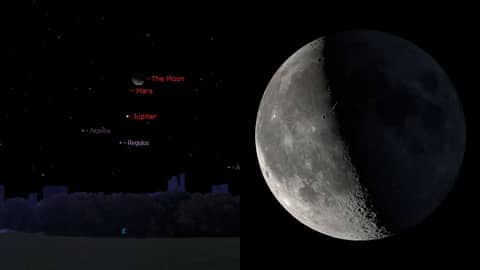
Skywatchers in parts of the northeastern United States may see China’s Tiangong space station near 7 p.m. EDT on Halloween, October 31, 2026, weather permitting. Saturn will also be visible in the east-southeast around 7 p.m. local time, while early Taurid meteors may appear.
Key details
- Tiangong’s Tianhe core module is forecast to follow a ground track from Chicago toward New York at an altitude of about 385 kilometers.
- Saturn’s rings are expected to appear nearly edge-on, with the south face tilted about 6.5 degrees toward Earth.
- The Taurids reach their strongest activity in the second week of November, though early meteors may be visible on Halloween.
- The forecast calls for mostly clear or partly cloudy skies in parts of the Northeast, Great Plains, Rockies, Pacific Northwest and Florida. Rain is possible from parts of Iowa and Nebraska toward the Gulf Coast.
- Tianhe-1, Tiangong’s first module, launched on April 29, 2021.
The Tiangong station’s Tianhe core module is forecast to pass near 7 p.m. EDT on a Chicago-to-New York ground track.
Why it matters
The predicted pass gives viewers in parts of the Northeast a chance to look for an orbiting space station alongside familiar planets and seasonal meteors. The forecast also gives skywatchers across several US regions a range of potential viewing targets, depending on local cloud cover.
What happens next
The evening offers several targets to watch, from Saturn to a possible station pass and early Taurid meteors. Which one will you look for first?
More stories

November 2026 Skywatching: Venus, Mercury and Planet Pairings

SpaceX Reportedly Limits Falcon 9 Commercial Bookings Beyond 2028
Rocket Lab Targets November 3 for Electron's 99th Mission

This Week In Space Episode 234 Explores Lunar Caves
Asteroid 2015 TB145 Passed Earth About 300,000 Miles Away in 2015