
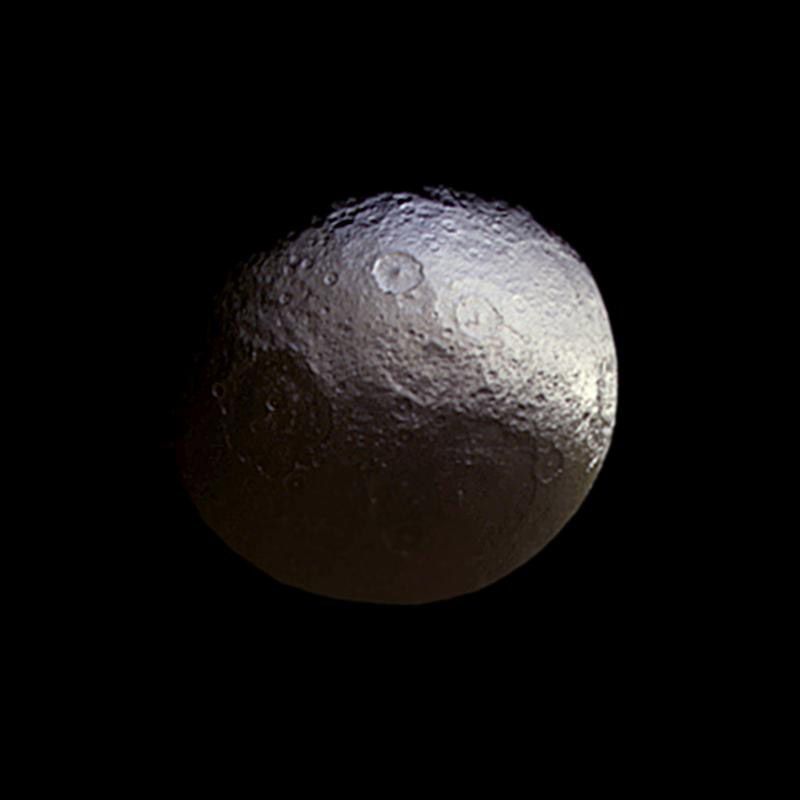
Giovanni Cassini Discovered Saturn's Moon Iapetus in 1671
Giovanni Cassini discovered Iapetus on October 25, 1671, making it the second Saturnian moon identified after Titan.
FlyMarshall Newsroom1 min read
Photo: NASA/JPL-Caltech/Space Science Institute
Astronomer Giovanni Cassini discovered Saturn’s moon Iapetus on October 25, 1671. Christiaan Huygens had discovered Titan about six years earlier, making Iapetus the second moon identified orbiting Saturn.
Key details
- Iapetus has contrasting bright and dark regions, which affect how visible it appears from Earth as it moves in its orbit.
- NASA’s Cassini spacecraft photographed Iapetus and documented its two-tone surface.
- Cassini later discovered Saturn’s moons Rhea, Tethys, and Dione.
Cassini discovered Iapetus on October 25, 1671.
Why it matters
Iapetus’s changing visibility and sharply contrasting surface make it a distinctive target in the study of Saturn’s moons. NASA’s Cassini spacecraft added close-up observations to the record that began with Cassini’s 17th-century discovery.
What happens next
No further timeline was announced.
More stories
Space
NASA Revises Artemis Landing Plans for 2027 and 2028 Missions

Space
Blue Origin Rebuilds New Glenn Launch Pad for Targeted 2026 Return
Space
October 2026 Hunter's Moon Reaches Full Illumination on October 26

Space
This Week in Space Episode 233 Covers Careers in the Space Workforce
Space
1946 V-2 Rocket Captured Earth Images From 65 Miles Up

Commercial