Munich Aeroacoustics Models Vertipad Surface Effects on Air Taxi Noise
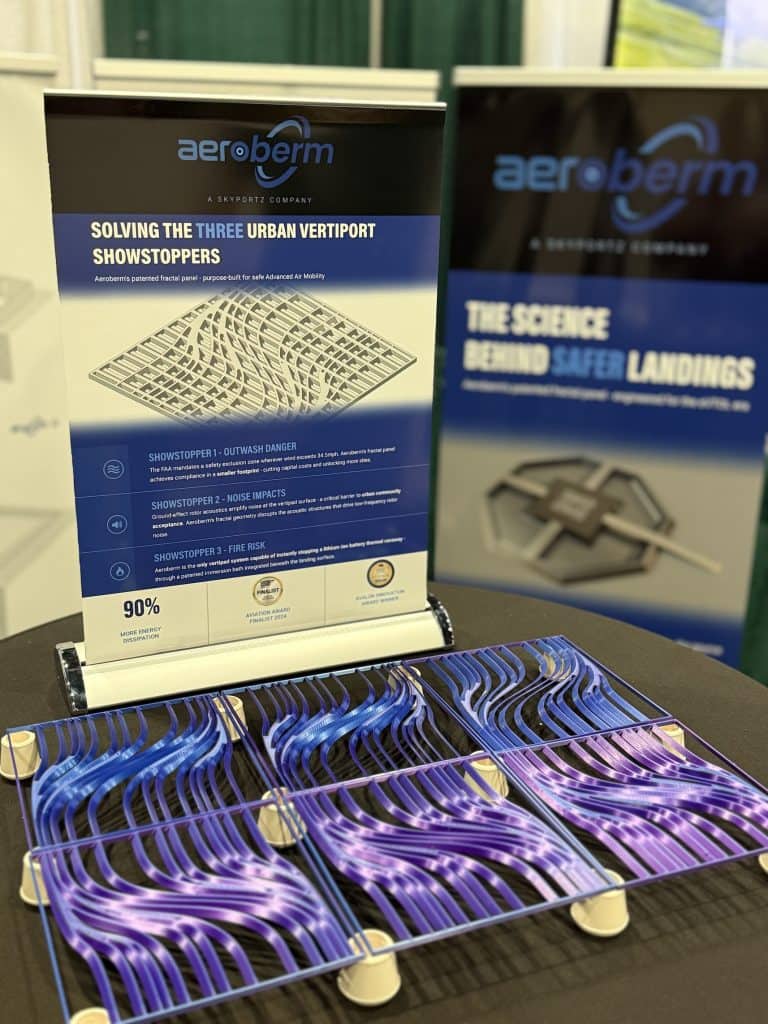
Munich Aeroacoustics used computer simulations to assess whether Skyportz's Aeroberm surface could reduce noise from electric air taxi operations.
FlyMarshall Newsroom1 min read
Photo: eVTOL Insights
Munich Aeroacoustics used its FLYO software to compare eight hypothetical vertipad surface configurations with an untreated pad, modelling noise from a propeller-driven electric air taxi. The simulations examined ground-level and elevated sites, including one positioned 30 metres above ground.
Key details
- The analysis comprised 18 simulations and calculated Sound Exposure Level at virtual microphone positions from 100 metres behind the pad to 700 metres along the departure route.
- The strongest modelled configuration reduced sound levels by about 5 dB behind the pad.
- At the elevated site, the model showed a reduction of about 1 dB at 300 metres. The reported effect largely disappeared beyond that distance.
- The study examined Skyportz’s Aeroberm modular vertipad surface.
The strongest modelled configuration reduced sound levels by about 5 dB behind the vertipad.
Why it matters
Aeroberm is designed to manage rotor downwash and outwash. Earlier computational fluid dynamics research by Swinburne University of Technology found that the surface dissipated airflow energy faster than conventional flat or grated surfaces. The reported noise results come from computer modelling, and laboratory and test-site work remains necessary to measure the panel’s acoustic performance.
More stories

Avolon Finalizes Order for 140 Boeing 737-10 Jets
Japan's Finance Minister Visits SkyDrive eVTOL Flight-Test Facility
Redwire Introduces ShadowVision Software for Octopus Payloads
IRGC Claims It Downed Two MQM-170 Drones Near Qeshm Island

EU Drone Summit 2026 Set for Brussels on Nov. 9–10