Hudson Institute Report Proposes Medium-Sized Tanker for U.S. Air Force
A Hudson Institute report recommends a new aerial refueler with greater range and fuel capacity, alongside airfield and tanker-system investments.
FlyMarshall Newsroom1 min read
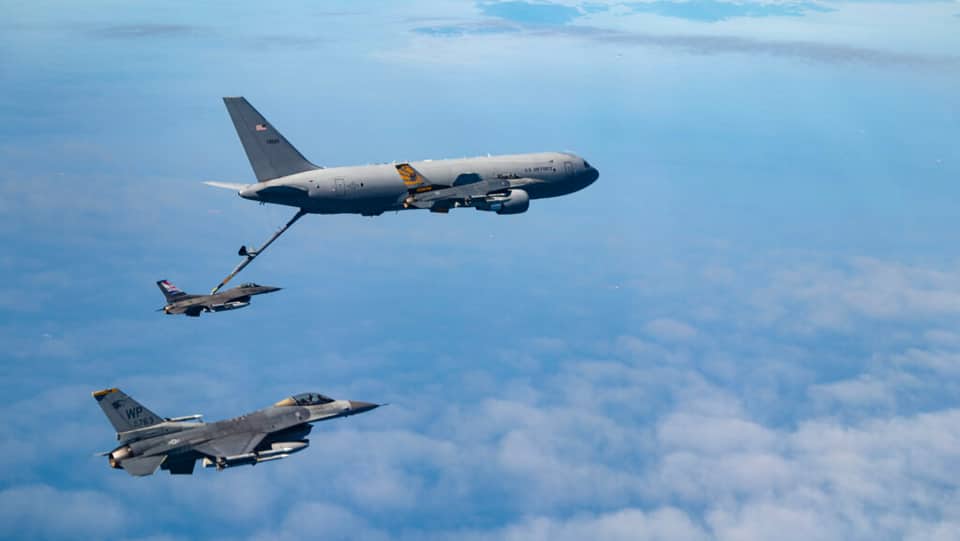
Photo: Breaking Defense
The Hudson Institute report “Resilient Reach: Redesigning Aerial Refueling for Contested Global Operations,” by Timothy Walton and Shane Dennin, recommends that the U.S. Air Force develop a medium-sized tanker with greater range and fuel capacity. It names a blended-wing-body aircraft as one possible design.
Key details
- The report models a 510-aircraft fleet comprising 260 KC-46s and 250 blended-wing-body tankers.
- It estimates research and development, procurement, and sustainment for that fleet at $397.6 billion, about $15.5 billion below its modeled cost for 510 KC-46s.
- It estimates $35.5 billion for airfield infrastructure, defenses, and distributed fuel storage.
- It estimates $13 billion for tanker mission-system upgrades, including $8 billion for 260 KC-46s.
- The report assesses the KC-46’s range, fuel offload, and survivability as limitations in a conflict with China.
The report models a 510-aircraft fleet with 260 KC-46s and 250 blended-wing-body tankers.
Why it matters
The recommendations connect tanker design with the bases and onboard systems that support refueling operations. For U.S. aviation, the report’s modeled fleet and cost estimates offer a defined proposal for weighing a new tanker against additional KC-46 purchases.
What happens next
The report sets out a proposed mix of new tanker development, fleet upgrades, and airfield investments for Air Force planners to consider. Which part of the refueling plan would you follow most closely?
More stories
India's Defence Acquisition Council Approves Light Multi-Role Helicopter Proposals
U.S. Air Force Awards Lockheed Martin ARRW Production Contract

IndiGo Plans International Flights From Navi Mumbai in February 2027

Baykar Kalkan UAV Completes At-Sea Flight Tests
Finnair Weighs Expanding Fuel-Hedging Coverage