SpaceX Bandwagon-5 Set to Carry 32 Payloads From Cape Canaveral
SpaceX planned a Falcon 9 launch for October 19, with Starfall and 31 customer payloads aboard.
FlyMarshall Newsroom · via Spaceflight Now2 min read
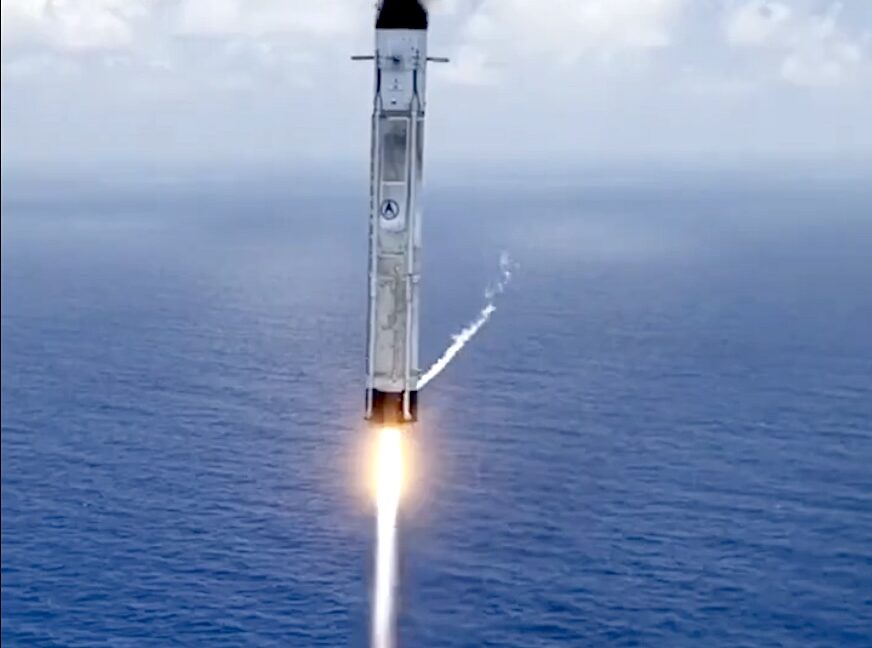
SpaceX planned to launch its Bandwagon-5 rideshare mission from Space Launch Complex 40 at Cape Canaveral Space Force Station on October 19, 2026. The one-hour launch window was scheduled to open at 6:30 a.m. EDT, or 10:30 UTC. The mission was expected to carry 32 payloads: the Starfall reentry capsule and 31 other spacecraft or payloads.
Exolaunch manifested 20 of Bandwagon-5’s 31 customer payloads.
What has been confirmed
The supplied source reports these mission details as likely, rather than officially confirmed. It describes Starfall as an uncrewed capsule making its second launch, and lists Falcon 9 first-stage booster B1085 for the flight. The booster was expected to make its 19th flight and attempt a landing on the droneship A Shortfall of Gravitas. The report says Exolaunch manifested 20 of the other 31 payloads. These include four HawkEye 360 radio-frequency monitoring satellites, four Iceye communications satellites and six Xona Space Systems navigation satellites. Varda Space Industries’ W-7 capsule was also listed, with a planned microgravity experiment examining whether microgravity affects the solubility of the cancer drug Protac. The manifest also included Portal Space Systems’ 260-kilogram Starburst-1 demonstration spacecraft. The report says Starburst-1 is designed to demonstrate orbital maneuvers and carry a customer payload of up to 50 kilograms. The source attributes Starfall’s dimensions and capacity to an FAA environmental assessment: about 0.75 meters tall, 3.1 meters in diameter, 2,100 kilograms in mass, and able to carry up to 1,000 kilograms of payload. It also reports a 45th Weather Squadron forecast giving a 55% chance of acceptable launch weather, with gusty winds a concern and a moderate-to-high risk of unacceptable weather for booster recovery.Why it matters
A rideshare launch places payloads from multiple organizations on one rocket, giving smaller spacecraft access to orbit alongside larger mission hardware. The listed payloads span satellite services, navigation, spacecraft maneuver demonstrations and microgravity research, including a capsule carrying an experiment related to a cancer drug.FlyMarshall context
For passengers and airport operators, a launch from Cape Canaveral does not operate like an airline departure: the mission follows a scheduled launch window, and weather can affect both liftoff conditions and a booster’s planned recovery at sea. The reported 6:30 a.m. EDT opening gives the planned start of the window, not a confirmed launch time.What happens next
The supplied report describes the launch as scheduled for October 19, 2026, but does not confirm that liftoff occurred. It gives no confirmed outcome for the launch, Starfall’s reentry, or the booster recovery.Continue reading
This is an excerpt. The full story, written and reported by Spaceflight Now, continues on their site.
Read Full Story at Spaceflight NowSourceSpaceflight Now