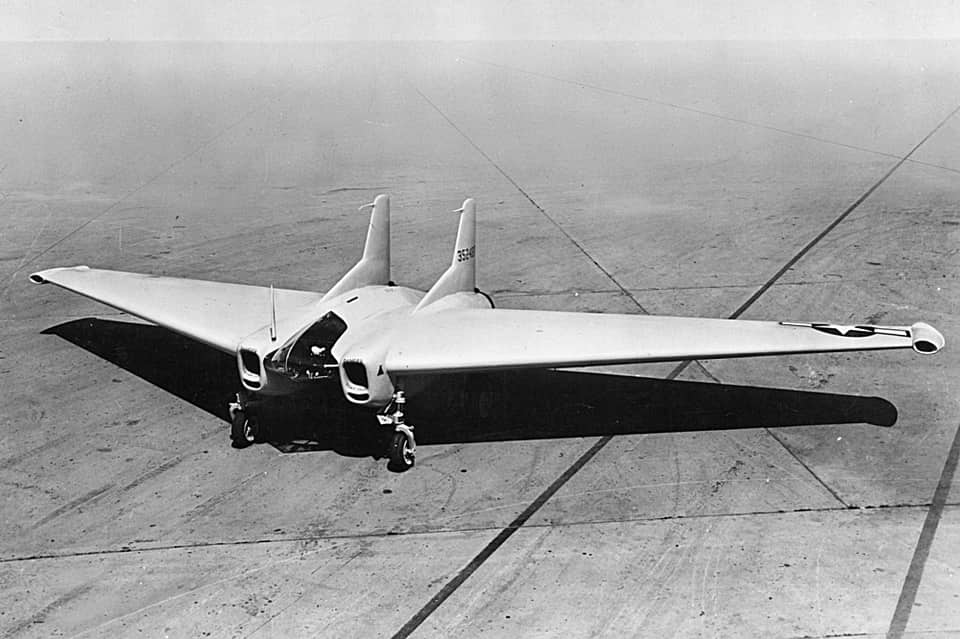
Northrop's XP-79B: A World War II Flying-Wing Experiment
Northrop developed the XP-79B as a fighter aircraft under the USAAF's MX-365 project, pairing a prone pilot position with twin turbojets.
FlyMarshall Newsroom1 min read
Photo: UAS Vision
Northrop developed the XP-79B during World War II as an experimental flying-wing fighter associated with the USAAF’s MX-365 project. The design put the pilot in a face-down position and used a welded magnesium-alloy monocoque.
Key details
- The aircraft was initially conceived with rocket propulsion; the XP-79B instead used two Westinghouse 19B turbojet engines.
- Its first flight took place on September 12, 1945, from Muroc.
The XP-79B placed its pilot face-down inside a welded magnesium-alloy structure.
Why it matters
The XP-79B combined an unusual prone cockpit with a magnesium-alloy airframe and a change from proposed rocket power to twin turbojets. Those features set it apart among the experimental aircraft developed during the wartime period.
More stories

Tech & OEMs
Future Flight Global Announces Agreement Covering 10 BETA ALIA Aircraft

Tech & OEMs
Electra and VertiPorts by Atlantic Explore New York Infrastructure

Tech & OEMs
Horizon Aircraft, Constance Lake First Nation Sign MOU on Cavorite X7 Medevac Possibility

Tech & OEMs
BETA Technologies' Q3 2026 Revenue Reported at $17.7 Million
Tech & OEMs
Airbus Net Orders Reportedly Top 1,300 Aircraft

Tech & OEMs